The Attentive Making Steps: Why I Teach Attention Before Technique
It's been a while since I've written here — since November, actually. Not for lack of things to say. For the past few weeks, months really, I've been living two very different lives.
One was full of university entrance exams, corrections, deadlines, and everything that comes with teaching at this time of year. The other happened quietly, in the evenings and in small pockets of time I had to fight for. That's where I rebuilt something I'd created last year — a workshop that had only ever existed inside someone else's private membership — and gave it a proper home of its own. I also realigned this whole website to actually reflect what I do, which took longer and more thought than I expected.
Something had to give, and it was the newsletter, and this blog page. I'm not sorry about that — some seasons are for making, not writing about making. But I missed this, and I wanted the first thing I wrote, coming back, to actually mean something.
So here it is.
For many years, I thought I was teaching techniques.
Watercolor monotype. Gel plate printing. Eco-printing. Botanical collage. Mixed-media illustration.
Each workshop centered on a different process, different materials, different creative possibilities. Yet after teaching hundreds of students, I began to notice something I hadn't planned.
The techniques changed. The sequence underneath them did not.
Whether we were gathering autumn leaves, pulling a first monotype print, or layering transparent washes of watercolor, we kept returning to the same quiet rhythm — not because I designed it that way, but because it's simply how I work myself, and it turned out to be how most people work, once they slow down enough to notice.
Eventually I understood that I wasn't teaching a collection of techniques. I was teaching a way of paying attention. Naming it helped me see my own practice more clearly. I call it The Attentive Making Steps.
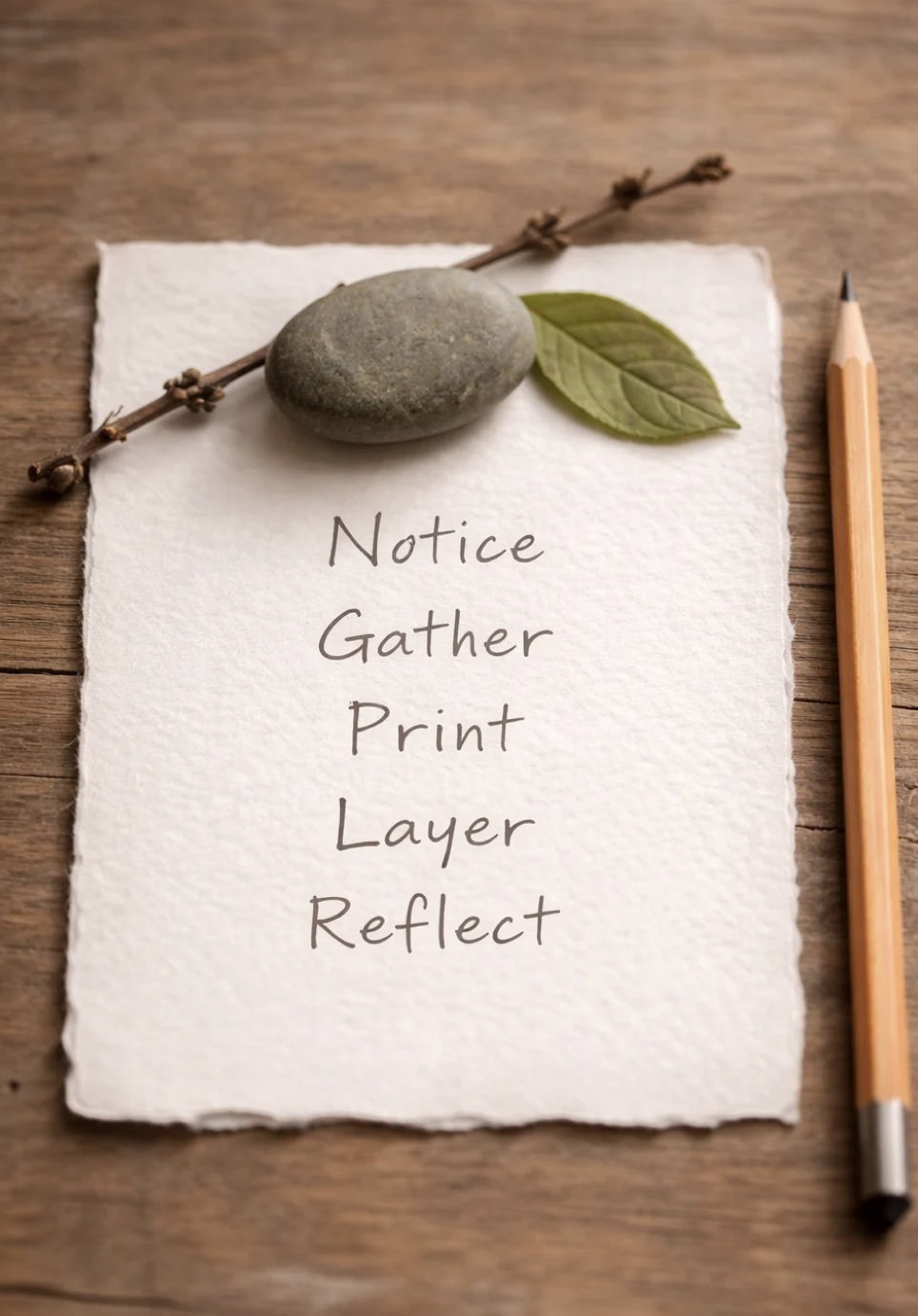
The Attentive Making Steps.
Creativity doesn't begin with skill
Many people believe creativity begins with talent. Others think it begins with inspiration. In my experience, it begins with neither.
I don't see creativity as a talent reserved for a few people. I see it as a way of paying attention.
Long before we pick up a brush or choose a color, we choose what deserves our attention. A shadow on a leaf. The rhythm of a branch. The texture left behind by an old print. The delicate network of veins inside a petal.
When we learn to notice deeply, ideas emerge on their own. Technique becomes simply a language for expressing what we've already seen.
From observation to expression
Nature has always been my teacher — not because it hands us beautiful subjects to paint, but because it constantly shows how growth actually happens.
Nothing in nature appears fully formed. Leaves unfold slowly. Seeds wait for their moment. A river doesn't cut through stone by force — it does it through repetition, season after season, until the shape changes.
Creative practice follows the same rhythm. Our strongest work rarely comes from one dramatic flash of inspiration. It grows through observation, small experiments, quiet discoveries, and reflection.
That understanding, over years, became the foundation of everything I teach.
The Attentive Making Steps
Each workshop looks different on the surface. Underneath, they all return to the same five stages.
1. Notice
Everything begins with attentive seeing. Before making anything, I ask students to slow down — not to search for a spectacular subject, but to focus on one small detail. The curve of a stem. The edge of a leaf. The pattern of overlapping grasses.
Attention narrows. Overwhelm disappears. Curiosity takes its place.
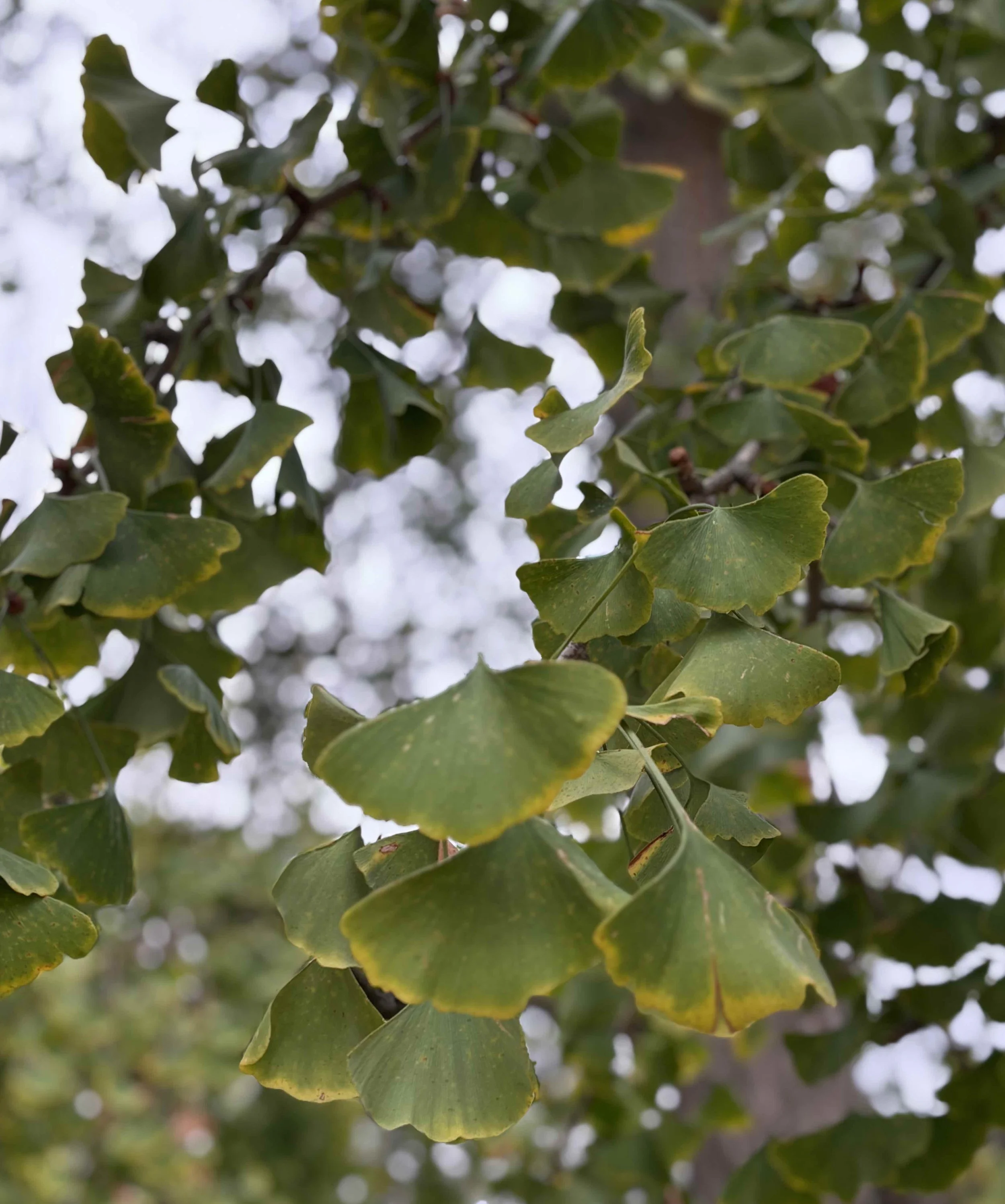
Have a walk. Slow down and really look.
2. Gather
The next step is deliberately simple: gather a few natural materials, choose limited tools, work with what's already at hand.
One of the biggest obstacles to creativity is believing we need more supplies before we're allowed to begin. In reality, creative confidence grows through thoughtful limitation, not endless options. A single leaf can become an entire lesson.
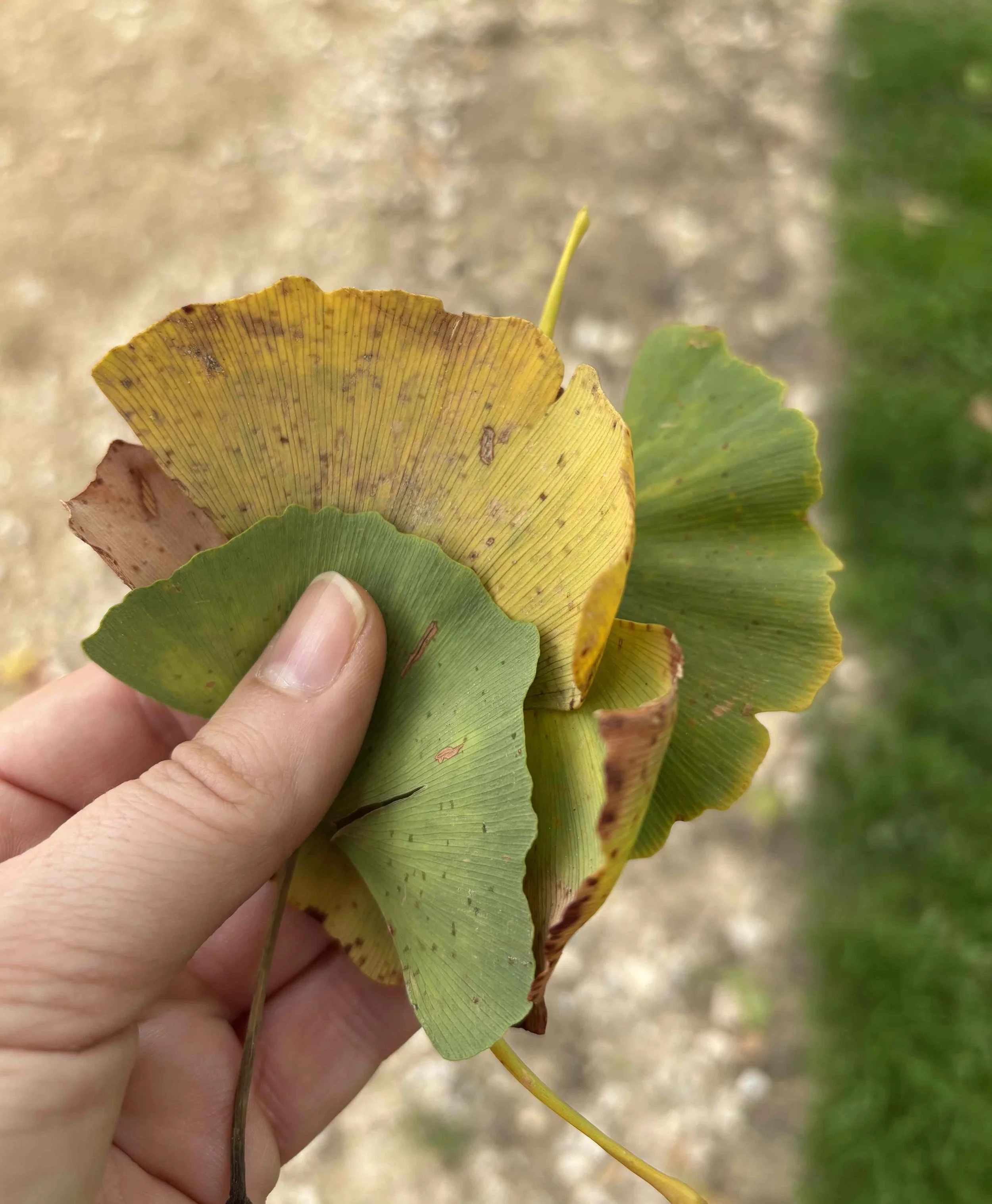
Choose only what speaks to you.
3. Print
Now the first mark. Whatever the medium, the goal isn't perfection—it's simply to begin.
Now comes the first print. This is where attention becomes visible. The leaves you've chosen leave their own record behind. Every print contains surprises— because nature always has something to say. Instead of resisting those surprises, we welcome them. They become collaborators, not mistakes.
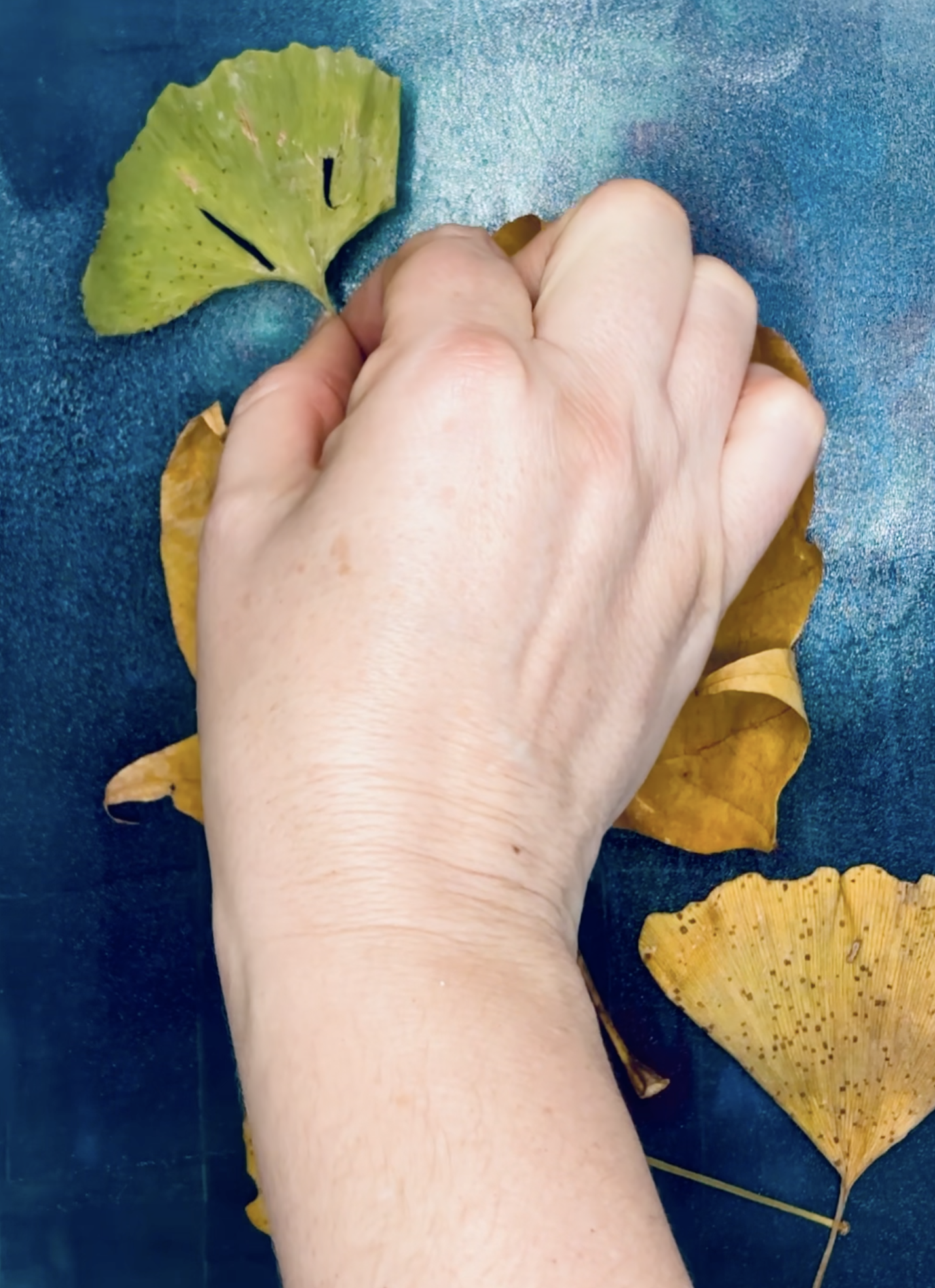
Let curiosity guide the first mark.
4. Layer
Once the first impression exists on the paper, a conversation begins. We respond to what's already there — maybe with watercolor, maybe with drawing, maybe with another print. Each layer asks us to observe again before deciding on the next move.
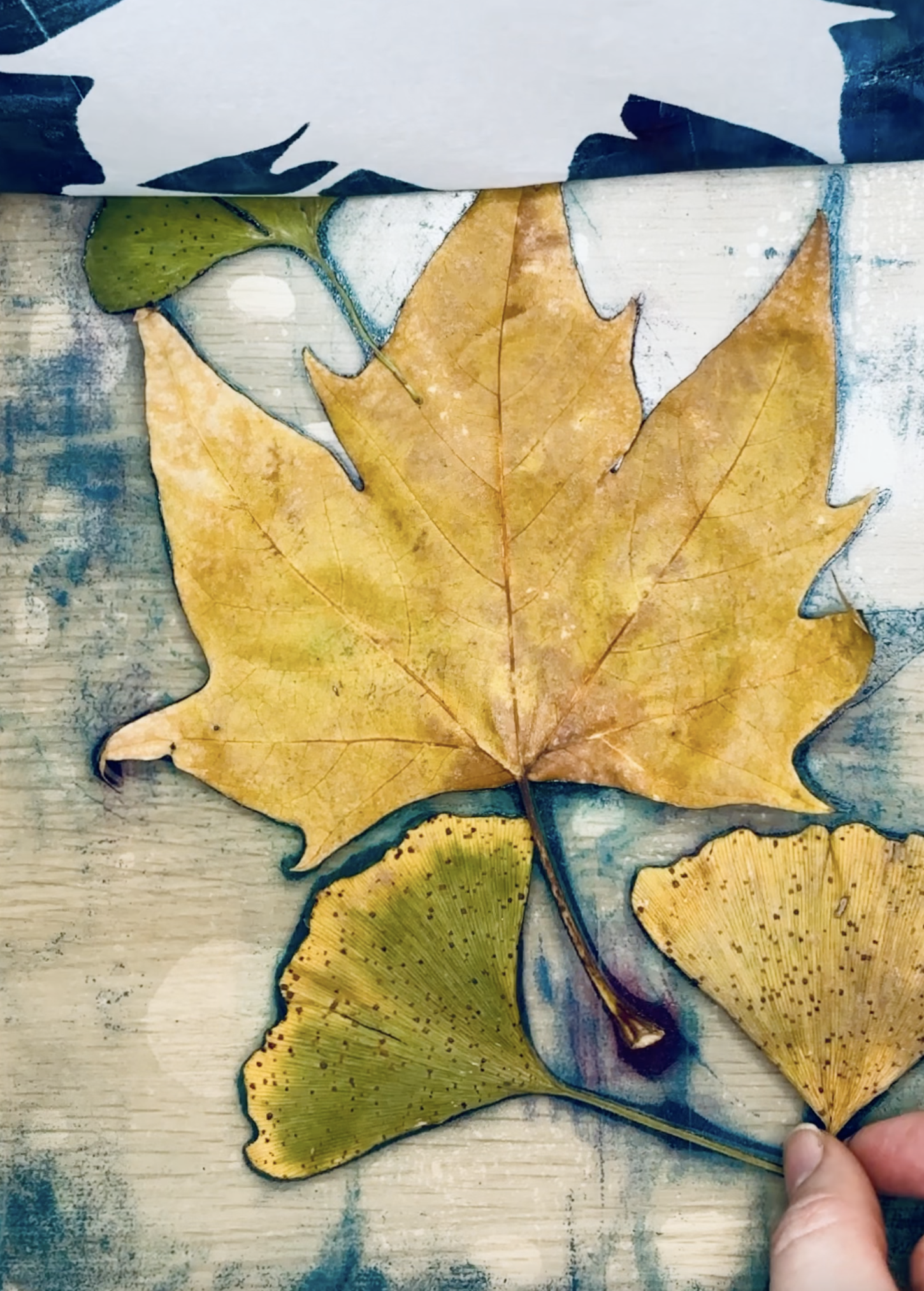
Respond instead of controlling.
This is exactly where a piece I've been living with for months finally came together — a portrait built up slowly, surrounded by botanical impressions and a few symbolic elements I'd been wanting to bring into my work for a long time. None of it arrived at once. The face came first, then the botanical textures around it, then the smaller symbolic details, each one only possible because the layer before it was already dry and already decided. That's the part people don't see when they look at a finished piece — how much of it was built one honest decision at a time.
We're not decorating a surface at this point. We're building meaning.
5. Reflect
This last step is the one most people skip. We finish a piece and move straight on to the next thing.
Instead, I ask students to pause. What worked? What surprised you? What would you keep? What might you try differently next time?
Reflection is what turns making into learning. It sharpens visual judgment, builds real confidence, and creates continuity — so that one session actually informs the next, instead of every piece starting from zero.
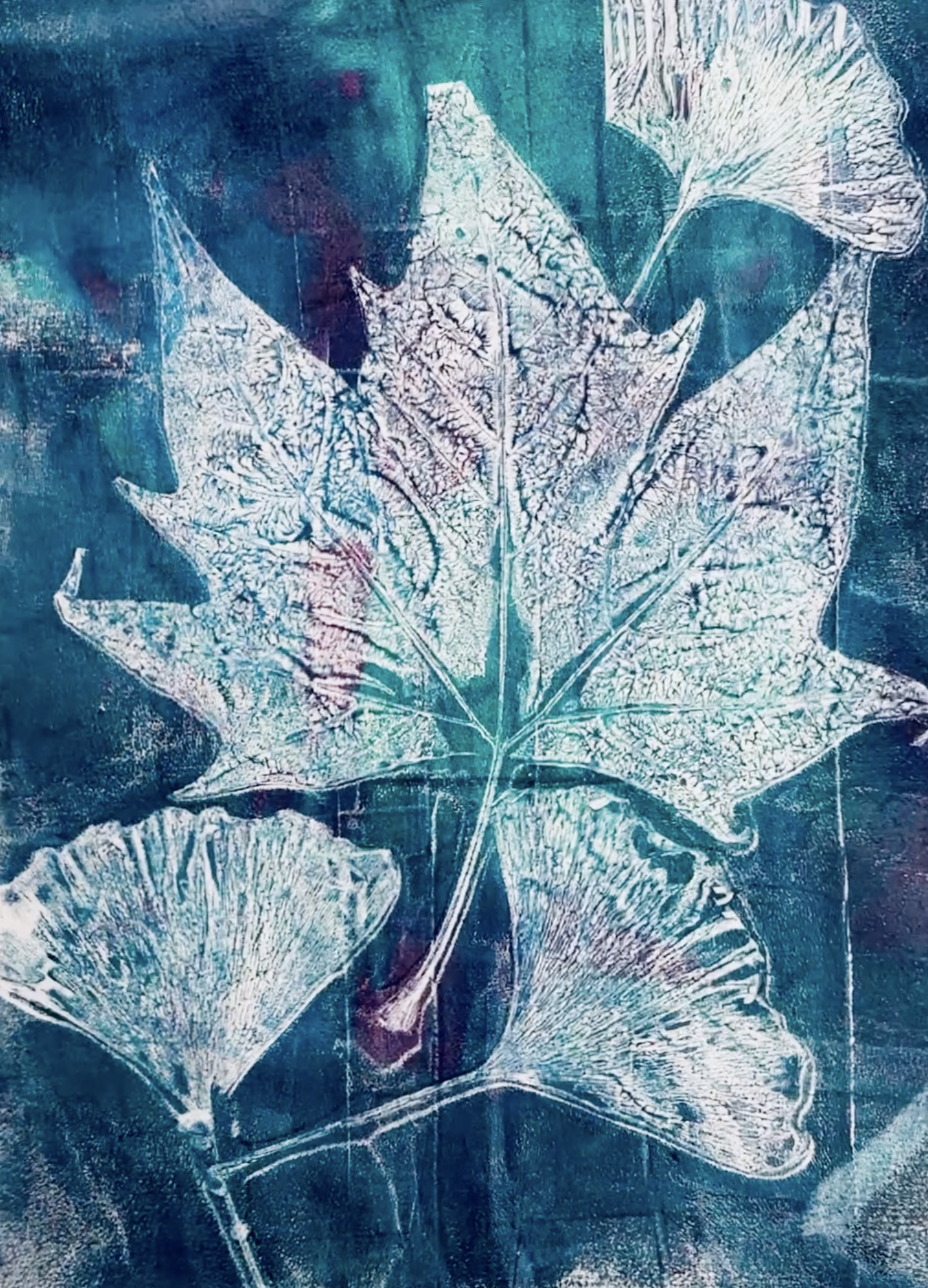
Pause. Ask what the print is teaching you.
Why this framework matters
The Attentive Making Steps aren't rules. They're a gentle structure underneath the making — a reminder that art isn't a race, it's a practice, one that develops through patience and repetition rather than talent alone.
Students tell me, again and again, that these five steps quiet the perfectionism that usually keeps people from starting at all. Instead of worrying about producing a successful piece, they focus on the next small, honest action.
Notice. Gather. Print. Layer. Reflect.
One step leads naturally into the next.
What this means for how I teach now
I want to say this plainly, because I think it matters more than it used to: my goal has never been simply to teach techniques, or to help you complete a piece of art. It's to help you develop the confidence to observe more deeply, think like an artist, and discover your own visual language — the thinking behind each decision, so you can carry it into your own work long after any single session ends.
If what you're looking for is a fast technique to master — a shortcut to a pretty result you can post and move on from — that's genuinely fine, and there are wonderful places to find it quickly. But it isn't quite what I make. What I teach is slower on purpose, for people who sense that the way they approach a blank page might tell them something true about the way they approach their life, and who are curious enough to find out.
Beyond technique
Although these steps first emerged from botanical printing, eco printing, watercolor monotype or gel printing, they were never really about those materials. Whether I'm painting a child's portrait or printing a leaf onto paper, the process begins in the same place — slowing down, observing carefully, letting curiosity lead before the brush does. I find the same rhythm when I sketch while traveling, when I write academic papers, when I simply walk through a garden and notice what's changed since the last time I looked.
Attention always comes first. Creation follows.
In many ways, The Attentive Making Steps describe not only how I teach — they describe how I try to live.
An invitation
If this resonates with you, I'd love to invite you to begin your own attentive practice. I've put together a free guide — Discover Creative Freedom with Five Nature-Inspired Exercises — with simple starting points to help you slow down and reconnect with your own noticing.
Click on the image to download the guide.
You don't need expensive materials. You don't need previous experience. You only need a little curiosity, and a willingness to pay attention to what's already around you.
Creativity doesn't begin with making. It begins with paying attention.
